Evidence over hype
Is Homer’s Odyssey Real? What Primary Sources Can (and Can’t) Prove
The Odyssey is trending, and the internet is mixing myth, history, and made-up facts. Here’s what primary sources can actually support, what they can’t, and how to verify claims yourself.
The Odyssey is trending again, which means the internet is doing what it always does: turning a famous story into a pile of confident “facts,” half of which don’t come from the story and the other half don’t come from history.

Source: Wikimedia Commons (CC0, 3rd century BCE)
So let’s do this the clean way.
If you’re asking “Is Homer’s Odyssey real?” you’re really asking a research question: what can we support with primary sources, and what is myth?
First: what counts as a “primary source” for the Odyssey?
A primary source is an original piece of evidence created close to the time you’re studying: a text, inscription, record, artifact, or image. But for ancient epics, you have to be precise about what the evidence is evidence of.

Source: Wikimedia Commons (CC BY-SA 4.0, c. 670 BCE)
In this case:
- Homer’s Odyssey is a primary source for the story itself (and for what later Greeks preserved and valued in that story).
- It is not a documentary record in the modern sense.
- If you want evidence about the Bronze Age world that may have inspired parts of the epic, you look for other kinds of sources: administrative tablets, archaeology, inscriptions, and contemporary records from nearby cultures.
A useful rule:
- If your claim is “this is what the poem says,” the poem is the primary source.
- If your claim is “this literally happened,” you need non-literary primary evidence too.
You can read and search the text itself here (primary source):
- https://www.perseus.tufts.edu/hopper/text?doc=Perseus%3Atext%3A1999.01.0135
The 3-bucket test (use this for any “Odyssey fact” you see online)
When you see a claim about the Odyssey, drop it into one of these buckets.
Bucket A: “The text says this”
This is the easiest bucket to verify. The question is simply: where does the poem say it? Book/line references matter.
Examples of verifiable claims:
- A character says X
- Odysseus does Y
- A place is described in Z way
Bucket B: “This reflects a real ancient world”
This bucket is about context. Even if Cyclopes aren’t real, the poem can still preserve real things: seafaring knowledge, social structures, patterns of gift exchange, war memory, and geography filtered through generations of storytelling.
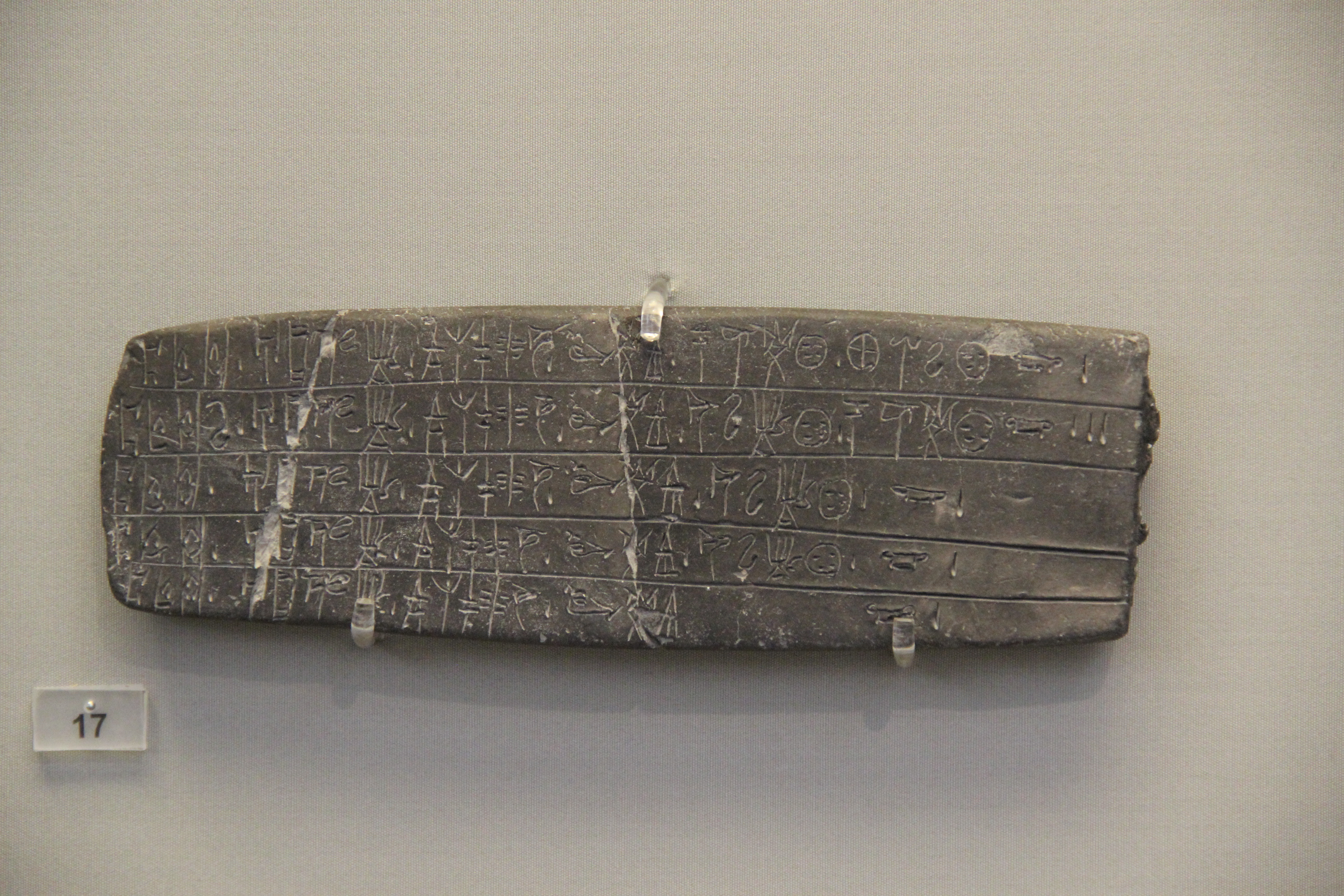
Source: Wikimedia Commons (CC0, 13th century BCE)
To support claims in this bucket, you look for primary evidence like:
- Linear B tablets (Mycenaean administrative records)
- material archaeology (sites, pottery distributions, destruction layers)
- inscriptions and later ancient historians (with caution, because later texts are not contemporary evidence)
Two reliable gateways for Linear B material and context:
- https://calibra.classics.cam.ac.uk/
- https://sirarthurevans.ashmus.ox.ac.uk/collection/linearb/
Bucket C: “Myth / untestable”
This is the bucket for:
- gods intervening directly
- monsters (Cyclops, Scylla/Charybdis as literal creatures)
- precise journey maps (“Odysseus definitely stopped at this exact island”)
These elements are meaningful as literature and belief, but they are not the kind of claims primary sources can “prove” the way a court transcript can.
Did Odysseus exist?
If by “exist” you mean “do we have a primary-source record that a man named Odysseus, king of Ithaca, did these events,” the honest answer is: no direct document like that survives.
But that doesn’t mean the question is useless. You can turn it into verifiable sub-questions:
- Do primary sources show that complex palace societies existed in the Mycenaean world? (Linear B helps here.)
- Do we have evidence of long-distance travel, raiding, and trade networks? (Archaeology often helps here.)
- Do later Greeks treat the story as inherited tradition? (Yes, but later tradition is not the same as contemporary proof.)
In other words: you can’t “prove Odysseus” the way you prove a modern person. But you can verify what the poem says, and you can test whether parts of its world match what we know from other evidence.
Myth vs history: quick examples you can check (without guessing)
Here’s a fast way to sanity-check trending Odyssey claims.
1) “Odysseus was a real documented king”
- What a primary source would look like: a contemporary inscription/tablet naming him in a datable context
- What we have: epic tradition + later references, not a surviving contemporary “record of Odysseus”
2) “The Odyssey describes real Bronze Age society”
- What a primary source would look like: administrative records, settlement patterns, material evidence
- What we have: primary evidence for Mycenaean palace administration (Linear B) and a rich archaeological record, which is useful for context, not for monsters
3) “This quote is from the Odyssey”
- What a primary source would look like: the quote in the text (Book/line)
- What we have: the full text is searchable, so most quote claims are easy to confirm or debunk
How to verify Odyssey claims (a workflow that scales)
If you want to stop relying on summaries, do this.
- Start with the exact claim. Write it as one sentence.
- Verify the text first (Bucket A). Locate where the idea comes from (or doesn’t).
- Then verify the historical layer (Bucket B). Match the claim to the right evidence type: tablets, archaeology, inscriptions.
- Keep myth in its lane (Bucket C). Treat myth as story and belief unless evidence supports a historical claim.
The habit
The Odyssey is one of the most influential stories ever written. But “influential” is not the same as “documented.” When something is trending, the fastest way to get misled is to confuse:
- what the poem says,
- what history can support,
- and what the internet confidently invented this week.
The defense is simple: read the primary source, then follow the evidence outward.
If you want a starting point, here are the 10 primary sources identified for The Odyssey: the original Greek text, Linear B tablets, manuscript fragments, excavation records, and ancient commentary, with source links and analysis tools on each.
Frequently asked questions
Is Homer's Odyssey real?
The Odyssey is real as a primary source for the story itself and for what later Greeks preserved. It is not a documentary record in the modern sense. Primary sources for the Bronze Age world that may have inspired it include Linear B tablets, archaeological excavation records, and inscriptions from Mycenaean palace sites.
Did Odysseus actually exist?
No direct document names a historical Odysseus as king of Ithaca. However, primary sources confirm that complex Mycenaean palace societies existed and long-distance trade networks operated in the Bronze Age. The question of Odysseus as a specific historical individual cannot be confirmed from surviving sources.
What are the primary sources for the Odyssey?
Primary sources for the Odyssey include Homer's text itself (freely available at the Perseus Digital Library), early papyrus fragments from Ptolemaic Egypt, Linear B administrative tablets from Mycenaean palace sites, archaeological excavation records, and ancient Greek commentary. Most are freely available online.
Where can I read the Odyssey as a primary source for free?
The full text of Homer's Odyssey is freely available at the Perseus Digital Library at perseus.tufts.edu. Early manuscript fragments and papyri are held at institutions including the Metropolitan Museum of Art and accessible via their online collections.
Find the primary sources behind any historical claim
Search any topic and get the most relevant primary and secondary sources, ranked by historical importance, with free copies wherever they exist online.
Find sources for your topic