Evidence over hype
America at 250: What the Founding Era Primary Sources Actually Say
America turns 250 in 2026. The internet is full of Founder quotes. Most of them are wrong. Here's what the primary sources actually say, and where to read them for free.
This summer, two separate official celebrations will mark America's 250th birthday: America250 and the White House's Freedom 250 initiative. Both invoke the Founders. Both cite the Declaration of Independence. Yet they make contradictory claims about what 1776 actually meant.
On July 4, 2026, the United States turns 250. It is the most politically contested anniversary in living memory. People across the spectrum are citing the Founders to argue about government, political parties, freedom, and the nature of the founding itself. The Founders are being invoked daily, on every platform, by every side. Almost none of it traces back to the founding era primary sources. Most of it will not.
The primary record does not belong to any interpretation. Jefferson's words, Madison's convention notes, Washington's letters, the ratification debates: they are free, fully online, and searchable by anyone. What they say is more complicated, more contested, and more interesting than what either side claims.
This is the piece for people who want to go back to what was actually written, said, and recorded.

Source: Wikimedia Commons (Public domain, 1776, National Archives, Washington DC)
What founding era primary sources actually exist
The Founding Era is unusually well-documented by pre-modern standards. The Founders knew they were making history and wrote accordingly: they sent letters constantly, kept records, published extensively, and debated in print. That paper trail survived because they, and later archivists, treated it as worth preserving.
The main categories of founding era primary sources break down like this:
Official documents. The Declaration of Independence, the Articles of Confederation, the Constitution, the Bill of Rights, the Federalist Papers, congressional records, and ratification debates. These are the documents that constituted the new government and the arguments for and against them at the time they were produced.
Correspondence. The Founders wrote staggering amounts of letters. Jefferson alone wrote an estimated 19,000. Adams corresponded constantly with Abigail, with friends, and with political rivals. Madison kept detailed notes. Hamilton wrote obsessively. Washington maintained meticulous records. The vast majority of this correspondence is now digitized and searchable.
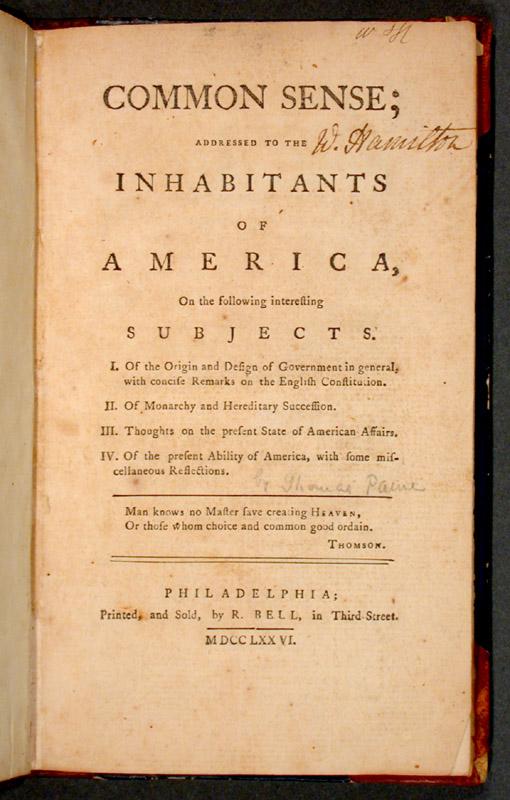
Pamphlets and newspapers. The revolutionary pamphlet literature (Thomas Paine's Common Sense being the most widely read) and colonial and early republic newspapers are primary sources for public opinion and political argument at the moment it was forming. These are in the primary record, not summaries of it.
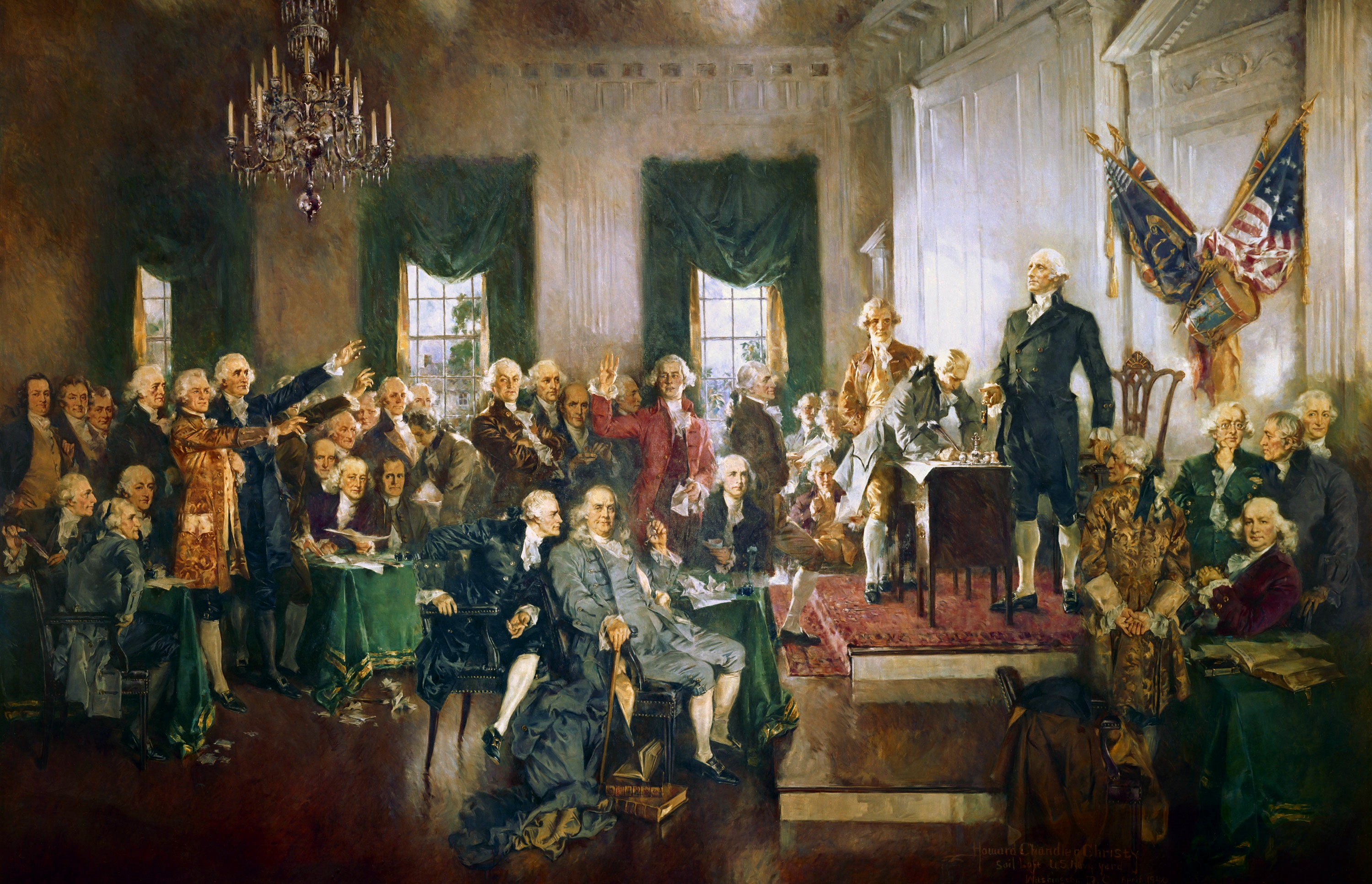
Convention notes and debates. Madison's notes from the Constitutional Convention of 1787 are the most detailed surviving record of what was argued and why. They were not published during his lifetime, which makes them a particularly candid window into a process conducted in deliberate secrecy.
Legislative records. The Journals of the Continental Congress and the early Congressional Record are the official business records of governing. Dry in places, but foundational for any question about what was actually decided and when.
Where to read founding era documents for free
The good news for 2026: a large proportion of the founding era primary sources are free and fully online.
Founders Online is the National Archives and University of Virginia digital edition of the papers of Washington, Jefferson, Hamilton, Madison, Monroe, Franklin, and Adams: more than 185,000 documents, fully searchable, free. The Jefferson letter to William Stephens Smith (November 13, 1787) is here. So is Abigail Adams's "Remember the Ladies" letter. Any Founder quote worth citing should trace back to a document in this database. The National Archives is also running "Free and Independent," an exhibition through 2027 with the original Declaration on display year-round.
The Avalon Project at Yale Law School has the official founding texts organized by subject: the Declaration, the Constitution, the Federalist Papers, the Anti-Federalist Papers, and the ratification debates, all annotated. Use it when you need the actual text of a founding document rather than a summary of it.
Chronicling America is the Library of Congress's digitized newspaper archive covering the colonial and early republic period. If you want to see what readers in Philadelphia or Boston were told in July 1776, this is the primary source for that, not a historian's account of it.
The Internet Archive holds out-of-copyright scans of 18th-century pamphlets and books. Common Sense, the Federalist Papers, and dozens of contemporary political pamphlets are there in their original printed form.
If you want to search across multiple archives alongside scholarly context for a specific founding era question, PrimarySourceFinder pulls from several archives at once and ranks results by historical relevance. It is faster than bouncing between tabs when the question is broad.
Four Founder quotes (and their real context) worth checking before the 250th
These will be everywhere this summer. Here is what the primary record actually shows.
Source: Wikimedia Commons (Public domain, 1776)
"The price of liberty is eternal vigilance."
This gets attributed to Jefferson constantly. It does not appear in any Jefferson document at Founders Online. Most researchers trace the phrase to a speech by John Philpot Curran, an Irish politician, in 1790. Curran has no direct connection to Jefferson. Monticello's own research classifies it as a spurious quotation.
Verdict: Not Jefferson. No credible founding era source.
"The tree of liberty must be refreshed from time to time with the blood of patriots and tyrants."
This one is real Jefferson. It appears in a letter to William Stephens Smith, dated November 13, 1787. But it is almost always stripped of context: Jefferson was writing about Shays' Rebellion and arguing that some periodic political turbulence was healthy for a republic. The full letter changes what the sentence means considerably. Read it at Founders Online before citing it.
Verdict: Real, but the context is doing significant work that the quote alone hides.
"A republic, if you can keep it."
Attributed to Franklin after the Constitutional Convention of 1787. This one is likely genuine: it appears in the diary of delegate James McHenry, who recorded that a lady (identified in his notes as Elizabeth Willing Powel of Philadelphia) asked Franklin what kind of government they had produced. But the sourcing is a single secondhand account, not a verified first-hand Franklin document. It is widely cited and believable. It is also one delegate's note from memory, not a transcript.
Verdict: Plausibly genuine, but worth acknowledging the sourcing is thinner than it looks.
"Washington warned against political parties."
This one is real. Washington's Farewell Address (1796) does warn against the spirit of party, at length and with force. This quote is being cited actively in 2026 political debates by people across the spectrum, often to condemn the opposing side. The problem is that most people invoking it have not read what he actually wrote: "It serves always to distract the public councils and enfeeble the public administration. It agitates the community with ill-founded jealousies and false alarms; kindles the animosity of one part against another; foments occasionally riot and insurrection." The Farewell Address was not even delivered as a speech. It was published in a Philadelphia newspaper on September 19, 1796. Both sides claiming Washington's authority should read the full paragraphs and let the primary source speak for itself.
Verdict: Real, and the actual text is stronger than the summary. Read it in full before citing it in any argument.
The broader habit: for any Founder quote circulating this summer, your first check is Founders Online. If it is not there, or you cannot trace it to a specific document, that absence tells you something. The same principle applies to any historical claim, and it matters more in 2026 than it ever has.
What the founding documents actually argue
One thing that gets flattened in anniversary coverage is that the founding era primary sources are not a unified statement of principles. They are a record of a sustained argument between people who disagreed about almost everything except independence.
The Declaration of Independence and the Constitution were written eleven years apart by people with sharply different views about what kind of government they were building. The Federalist Papers and the Anti-Federalist Papers are a direct documented debate between those positions. Hamilton and Jefferson could barely stay in the same administration. Adams and Jefferson were friends, then enemies, then old friends again. Both died on July 4, 1826, exactly fifty years after the Declaration.
Source: Wikimedia Commons (Public domain, Howard Chandler Christy, 1940)
Reading the founding era primary sources gives you the actual argument, not the mythology, including the contradictions and compromises the Founders themselves lived with.
Jefferson's original "Rough Draft" of the Declaration included a passage condemning King George for the slave trade: "he has waged cruel war against human nature itself, violating its most sacred rights of life and liberty in the persons of a distant people." Congress struck it out. That deletion is in the primary record, readable in full on Founders Online. Madison's notes from the Constitutional Convention, particularly August 22 and August 25, 1787, document the debates over the slave trade clause and the final language protecting it until 1808. The Constitution itself never uses the word "slavery," but the provisions are there, and the debates about them are documented.
People asking what the founding era primary sources say about slavery will find the answer in the same archives as everything else: Founders Online, the Avalon Project, Madison's notes. The record does not hide it.
The Declaration's "all men are created equal" was understood differently by Jefferson, Adams, and Abigail Adams at the moment it was written. You can document that difference, because the correspondence exists. Abigail Adams put it plainly in a letter to John on March 31, 1776: "Remember the Ladies, and be more generous and favorable to them than your ancestors." John's response, in the same correspondence, tells you a great deal about the limits of the "all men" claim as it was actually intended.
Doing serious founding era research
If you want to go beyond the anniversary soundbites, the most useful habit is to start with one specific document, read it in full, and follow it outward to the correspondence and debates surrounding it.
A few approaches that scale:
Track a question through the correspondence. If you want to know what the Founders thought about executive power, start with Hamilton's Federalist No. 70, then pull Jefferson's letters on the same period, then read the Anti-Federalist response by Brutus (usually attributed to Robert Yates). All three are in Founders Online or the Avalon Project. You will get three different answers to the same question, all in the primary record.
Use the newspapers. Colonial and early republic newspapers are underused founding era primary sources. They show what ordinary readers were being told at the time, which is different from what the Founders said in private correspondence. Chronicling America has the digitized runs.
Read the Anti-Federalists. The case against the Constitution is documented, argued, and in the primary record. The Federalist Papers are famous partly because the Anti-Federalist papers lost. Reading both sides gives you a much more accurate picture of what was actually at stake in 1787.
Save sources as you go. The founding era is deep enough that you will lose track of documents quickly if you are not capturing them while they are in front of you.
The research window is open
The founding era primary sources are more accessible in 2026 than they have ever been. Founders Online is free and searchable. The Avalon Project is free. Chronicling America has digitized colonial newspapers. As the anniversary generates more content, primary sources will get cited more, which means they will get misquoted more. The fact-check is always one search away.
What the Founders said is more interesting, more contested, and more useful than what people say they said. This July 4, skip the memes. Go back to the documents with PrimarySourceFinder.
Want to see the founding era sources already pulled together? The America 250 primary sources page shows the top 10 founding documents, ranked by relevance, with tools to find free copies, fact-check quotes, and read deep analysis of what each one actually says.
Frequently asked questions
What are the best primary sources for America 250?
The best primary sources for America 250 are Founders Online (founders.archives.gov), which contains over 185,000 documents from Washington, Jefferson, Hamilton, Madison, Franklin, and Adams, all free and searchable. The Avalon Project at Yale Law School has the Declaration of Independence, Constitution, Federalist Papers, and ratification debates. Both are free.
Did Jefferson say 'the price of liberty is eternal vigilance'?
No. This quote does not appear in any Jefferson document at Founders Online. Monticello's own research classifies it as a spurious quotation, most likely traced to Irish politician John Philpot Curran in 1790. Jefferson has no documented connection to the phrase.
Is the 'tree of liberty' quote real Jefferson?
Yes. 'The tree of liberty must be refreshed from time to time with the blood of patriots and tyrants' appears in Jefferson's letter to William Stephens Smith, dated November 13, 1787, available on Founders Online. The full letter shows Jefferson was discussing Shays' Rebellion, not making a general political statement.
Where can I read founding era primary sources for free?
Founding era primary sources are freely available at Founders Online (founders.archives.gov) with over 185,000 documents, the Avalon Project at Yale Law School (avalon.law.yale.edu) for official founding texts, and Chronicling America (chroniclingamerica.loc.gov) for digitized colonial and early republic newspapers.
Find the primary sources behind any historical claim
Search any topic and get the most relevant primary and secondary sources, ranked by historical importance, with free copies wherever they exist online.
Find sources for your topic