Evidence over hype
Lilith as Adam's First Wife: The Primary Sources, Layer by Layer
The online claim that Lilith was Adam's first wife rests mainly on a medieval Ben Sira story, with older layers from Isaiah, incantation bowls, and a debated tree passage often mixed in.
Source trail
Claim → sources → boundary
Alphabet of Ben Sira
The clearest source for Lilith as Adam's first wife, but it is a medieval narrative, not Genesis or ancient Mesopotamia.
Huluppu Tree passage
Relevant to Lilith debates, but ETCSL renders the figure as a phantom maid and does not prove the first-wife story.
Incantation bowls
Show liliths in late antique protective magic and demon traditions, not an Eden backstory.
I see the Lilith claim everywhere online: Adam had a first wife before Eve, and that story was buried or ignored.
The problem is not that the claim comes from nowhere. It has real sources behind it. The problem is that those sources are often collapsed into one neat story.
Lilith Adam first wife primary sources do not begin with a single ancient text that proves the whole later story. They sit in layers: older demon and night-spirit traditions, a debated Sumerian tree passage, a biblical verse, late antique incantation bowls, and then the medieval Adam-and-Lilith story in the Alphabet of Ben Sira.
That order matters. If we skip it, we end up saying things the sources do not say.
Short version
The clearest source for Lilith as Adam's first wife is the medieval Alphabet of Ben Sira excerpt preserved by the Jewish Women's Archive. In that story, Lilith is created from the earth like Adam, refuses to submit to him, leaves, and becomes tied to infant-protection amulets.
The older sources do something different. The Oxford Electronic Text Corpus of Sumerian Literature translation of Gilgameš, Enkidu and the Nether World includes the Huluppu Tree passage, but its figure in the tree is translated as a "phantom maid," not as Adam's wife. The British Museum incantation bowl and Penn Museum bowl show liliths in late antique magical practice. Isaiah 34:14 gives a textual appearance of Lilith in a desolation passage, not an Eden backstory.
Read together, the sources show development over time. They do not show one ancient, continuous story about Adam's first wife.
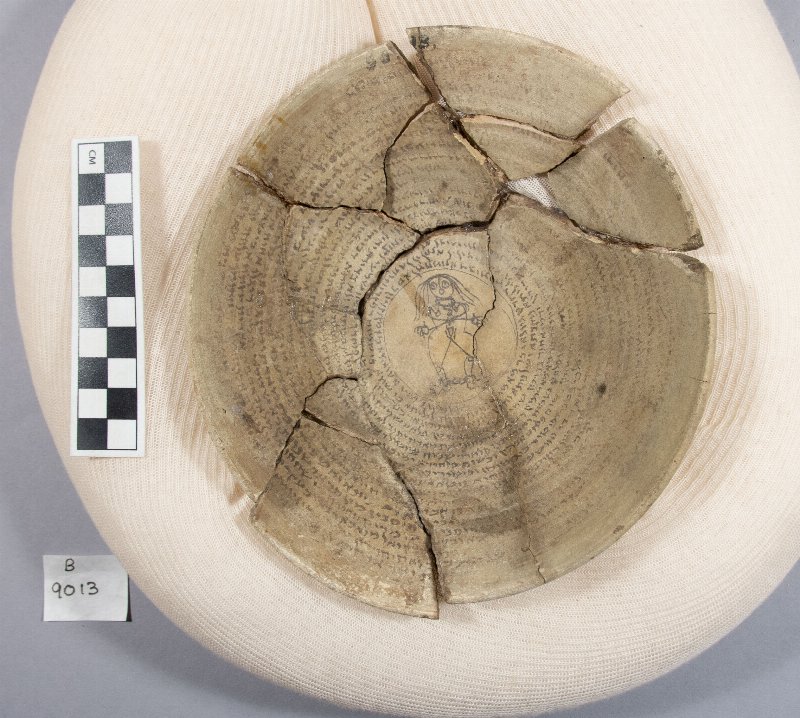
Source: Penn Museum. Hebrew Bowl B9013 from Nippur, described by the museum as a charm for a man and wife, particularly against the Liliths.
The main primary sources to check first
Alphabet of Ben Sira
- What it helps check: where the Adam-first-wife story appears clearly.
- What it supports: a story in which Lilith is created from the earth like Adam, refuses Adam's authority, leaves, and becomes connected with protective amulets.
- Limit: this is a medieval narrative. It does not prove the story existed in the same form in ancient Mesopotamia.
Isaiah 34:14
- What it helps check: a biblical textual appearance of Lilith in some translations.
- What it supports: Lilith appears in a wilderness or desolation passage.
- Limit: Isaiah does not mention Adam, Eve, Eden, or a first wife.
Incantation bowls
- What they help check: how liliths appear in late antique magical practice.
- What they support: liliths were treated as dangerous spirits in protective texts and household ritual objects.
- Limit: a protective bowl is not a Genesis narrative.
Huluppu Tree passage
- What it helps check: why some Lilith discussions reach back into Sumerian material.
- What it supports: a figure lives in Inana's tree in a Sumerian story.
- Limit: identifying that figure directly with the later Lilith is debated. It is not proof of Lilith as Adam's first wife.
Where the older Lilith material begins
The older material begins before the Adam-first-wife story, but not as the full story people often repeat.
There are older Near Eastern spirit and demon traditions around lilû, lilītu, and related figures. The connections between those terms, later Jewish Lilith traditions, and medieval storytelling are not simple. I would not write, "the Sumerians believed Lilith was Adam's wife." Adam is not part of that source world.
A more accurate statement is this: Lilith's later character draws from older demon and night-spirit traditions, then changes across Jewish textual, magical, and literary settings.
The incantation bowls make this visible. The British Museum bowl, dated to the 6th to 8th century and made in south Iraq, includes Aramaic text binding "demons and devils and lilith(s)." Its translation describes an "evil lilith" who appears by night and by day and threatens children. The Penn Museum bowl from Nippur is described as a charm for a man and wife, particularly against the Liliths, with a demon figure at the center.
Those bowls matter because they are objects, not later summaries. They show a ritual world in which liliths were feared and named. They do not tell the Adam-and-Eve story.
What the Huluppu Tree passage says
The Huluppu Tree passage is useful, but it is easy to overstate.
In the Oxford ETCSL translation of Gilgameš, Enkidu and the Nether World, Inana plants a tree in her garden. A snake nests at its roots. The Anzud bird settles in its branches. In its trunk, the translation says, "the phantom maid built herself a dwelling." Later, Gilgamesh kills the snake, the bird leaves, and the phantom maid leaves her dwelling and seeks refuge in the wilderness.
That passage belongs in the discussion because some later writers and popular accounts connect the tree figure with Lilith. But the translation itself does not give us the medieval Lilith story. It does not mention Adam. It does not mention Eve. It does not make the figure Adam's first wife.
The passage can support a discussion about older spirit and demon traditions. It cannot carry the full claim by itself.
What Isaiah 34:14 adds
Isaiah 34:14 gives a textual layer, not an Eden story.
In the NRSVUE translation at Bible Gateway, the verse says: "there also Lilith shall repose and find a place to rest." The surrounding passage is an oracle of desolation, filled with wild animals and wilderness imagery.
That matters, but only within its limits. The verse shows a Lilith appearance in a biblical translation tradition. It does not say Lilith was Adam's first wife. It does not mention Eve. It does not describe creation.
Isaiah belongs in the evidence map. It should not be stretched into a story it does not tell.
What the Alphabet of Ben Sira says
The recognizable Adam-first-wife story appears in the Alphabet of Ben Sira.
The Jewish Women's Archive page for Alphabet of Ben Sira 78: Lilith gives the core narrative. God creates a woman for Adam from the earth like him and calls her Lilith. Adam and Lilith argue. Lilith says they are equal because both were created from the earth. She utters God's ineffable name and flies away. Adam complains. Three angels are sent after her. She refuses to return and becomes connected to infant danger and protective amulets bearing the angels' names.
That is the strongest textual anchor for the version people recognize today. It explains why Lilith is now associated with equality, refusal, sexuality, danger, and protective rituals.
It also shows why dating matters. If the clearest first-wife narrative is medieval, then we should not describe it as a straightforward ancient Mesopotamian belief. The older layers matter, but they are not the same layer.
Why the bowls matter
The bowls matter because they move the discussion away from one famous story and into material evidence.
The British Museum object is a pottery incantation bowl with Aramaic text written in a spiral. Its translation binds "demons and devils and lilith(s)" and refers to an "evil lilith" threatening boys, girls, and infants. The curator's comments also warn that one edition needs to be used cautiously, which is exactly the kind of source limit worth keeping in view.
The Penn Museum bowl gives a second material example. Its collection record describes a terracotta bowl with Aramaic inscription around a demon, made as a charm for a man and wife, particularly against the Liliths. It was excavated in the Babylonian Expedition to Nippur II in 1890 and appears in the museum's Near Eastern collection.
These objects show that liliths were part of protective magic and household fear. They do not prove that the Ben Sira story was already circulating in full centuries earlier.
What the sources prove and what they do not
The sources support several claims.
They support an older Near Eastern demon and spirit background. They support a debated ancient tree passage that later readers often connect to Lilith. They support a biblical textual appearance in Isaiah 34:14. They support late antique magical traditions in which liliths are named in protective bowls. They support a medieval Adam-first-wife narrative in the Alphabet of Ben Sira.
They do not prove that Lilith was a historical person. They do not prove that Genesis originally contained a missing wife story. They do not prove that the Huluppu Tree figure is simply the same as medieval Lilith. They do not prove that the Adam-first-wife story existed in full form in ancient Mesopotamia.
That is the value of reading the sources separately. The story becomes less simple, but more honest.
What to search next
If I were checking this claim, I would not search only "Lilith first wife." That mostly returns modern summaries.
I would separate the layers:
- "Alphabet of Ben Sira Lilith Adam"
- "Gilgamesh Enkidu Nether World Huluppu tree phantom maid"
- "Isaiah 34 14 Lilith Hebrew Bible"
- "Aramaic incantation bowl liliths British Museum"
- "Penn Museum Lilith bowl Nippur"
- "lilu lilitu Mesopotamian demon tradition"
I also made a companion Lilith and Adam's first wife source page for this topic. The article explains the layers. The source page gives the source cards, search prompt, and limits for checking the claim yourself.
Sources
- Jewish Women's Archive: Alphabet of Ben Sira 78: Lilith. Public translation and study text for the medieval Adam-and-Lilith narrative.
- Electronic Text Corpus of Sumerian Literature: Gilgameš, Enkidu and the Nether World. Oxford translation for the Huluppu Tree passage, including the "phantom maid" in Inana's tree.
- British Museum: Incantation bowl, museum number 136204. Late-Post Sasanian Aramaic incantation bowl from south Iraq naming demons, devils, and liliths, with curator caveats.
- Penn Museum: Hebrew Bowl B9013. Nippur bowl described as a charm for a man and wife, particularly against the Liliths.
- Bible Gateway: Isaiah 34:14, NRSVUE. Translation showing a textual appearance of Lilith in a desolation passage. This supports a textual layer, not the Adam-first-wife story.
Frequently asked questions
Was Lilith really Adam's first wife?
The clear Adam-first-wife story appears in the medieval Alphabet of Ben Sira. Older sources point to demon, spirit, textual, and magical traditions, but they do not prove the later Adam-and-Lilith story in ancient form.
What are the best Lilith Adam first wife primary sources?
Start with the Alphabet of Ben Sira for the first-wife story, Isaiah 34:14 for a biblical textual layer, British Museum and Penn Museum incantation bowls for magical traditions, and the ETCSL Huluppu Tree passage as a debated older layer.
Does Gilgamesh prove Lilith was Adam's first wife?
No. The Huluppu Tree passage is relevant to Lilith discussions, but the ETCSL translation renders the figure as a phantom maid and does not mention Adam, Eve, or Genesis.
Are incantation bowls primary sources for Lilith?
Yes, they are material and textual evidence for late antique magical traditions involving liliths. They are not evidence that Lilith was Adam's first wife.
Does Isaiah 34:14 tell the Lilith and Adam story?
No. Isaiah 34:14 gives a textual appearance of Lilith in a desolation passage in some translations. It does not narrate Eden or an Adam-and-Eve backstory.
Find the primary sources behind any historical claim
Search any topic and get the most relevant primary and secondary sources, ranked by historical importance, with free copies wherever they exist online.
Find sources for your topic